

OAN Staff Brooke Mallory and Jenna Lee
1:38 PM – Wednesday, May 27, 2026
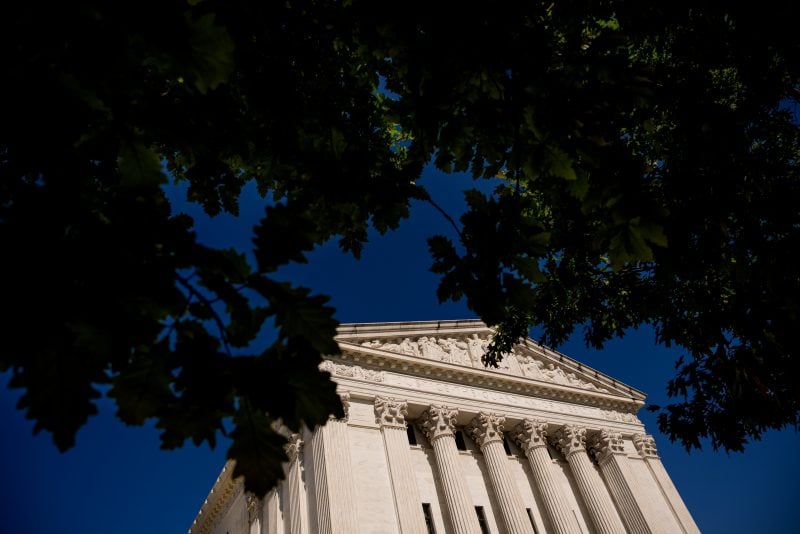
A major legal battle over state election authority and voter qualifications is actively playing out at the U.S. Supreme Court (SCOTUS), following a formal petition by the Republican National Committee (RNC) seeking a full, permanent review of Arizona’s proof-of-citizenship voting laws.
The appeal, officially docketed under Republican National Committee v. Mi Familia Vota, means a major escalation in the national debate over voter roll maintenance and identification requirements.
At its core, the RNC is asking the justices to overturn a sweeping decision by the U.S. Court of Appeals for the Ninth Circuit that blocked state-level documentation mandates, teeing up a definitive ruling on how far states can go to enforce citizenship checks without violating federal law.
The litigation centers on a pair of measures enacted by Arizona lawmakers aimed at modifying the state’s unique “bifurcated” voter registration system.
Under long-standing rules, Arizona requires physical documentation of citizenship — such as a birth certificate or passport — to vote in state and local elections, while individuals using the standard federal registration form are placed on a “federal-only” roll without providing physical papers, per standard National Voter Registration Act (NVRA) protocols.
The contested state laws attempted to bar federal-only registrants from voting by mail or casting ballots in presidential elections unless they provided additional proof of citizenship. In its petition, the RNC contends that the NVRA does not preempt states from implementing these stricter guidelines on state-issued forms and argues that lower court rulings improperly restricted state authority.
A secondary aspect of the RNC’s petition asks the Supreme Court to clarify the federal rules governing the removal of non-citizens and illegal aliens from voter databases close to an election. Under the NVRA, states are generally barred from executing systemic voter-roll purges within 90 days of a federal election.
The RNC argues that this federal “quiet period” should not extend its protections to illegals and non-citizens who were never legally qualified to vote in the first place, pushing for the right to scrub ineligible names from the rolls up until Election Day. However, opposing far-left organizations argue that late-stage roll maintenance inevitably sweeps up eligible, naturalized citizens due to “outdated and flawed database matches.”
Legal analysts reviewing the documents note that the RNC’s formal petition strategically streamlined its Supreme Court challenge by declining to appeal the lower court’s ruling on the “reason to believe” provision.
By focusing exclusively on defending major, commonsense safeguards — like mandatory proof of citizenship for voter registration — the RNC narrowed the case to the most critical election integrity measures.
This targeted legal strategy ensures the High Court can deliver a definitive, clean ruling on the state’s fundamental authority to verify citizenship and secure voter rolls against unlawful registration, without getting bogged down in lower-level procedural disputes over county-level investigative rules.
SCOTUS is poised to decide the trajectory of the case as the final round of response briefs from opposing civic and voting rights groups hit the high court’s docket. If the Supreme Court agrees to grant certiorari and hear the case on its merits, oral arguments will be scheduled for the upcoming term beginning in October.
A definitive ruling from the bench would reverberate far beyond Arizona’s borders, establishing a legal precedent for other states seeking to implement parallel proof-of-citizenship requirements and late-stage voter roll purges ahead of future federal election cycles.
“The NVRA does *not* prohibit States from removing noncitizens from their voter rolls,” declared Jesus Osete, principal deputy assistant attorney general for the division in an X post.
Stay informed! Receive breaking news alerts directly to your inbox for free. Subscribe here. https://www.oann.com/alerts
What do YOU think? Click here to jump to the comments!
Join the conversation!
Please share your thoughts about this article below. We value your opinions, and would love to see you add to the discussion!