

OAN Staff Brooke Mallory
5:18 PM – Tuesday, June 2, 2026
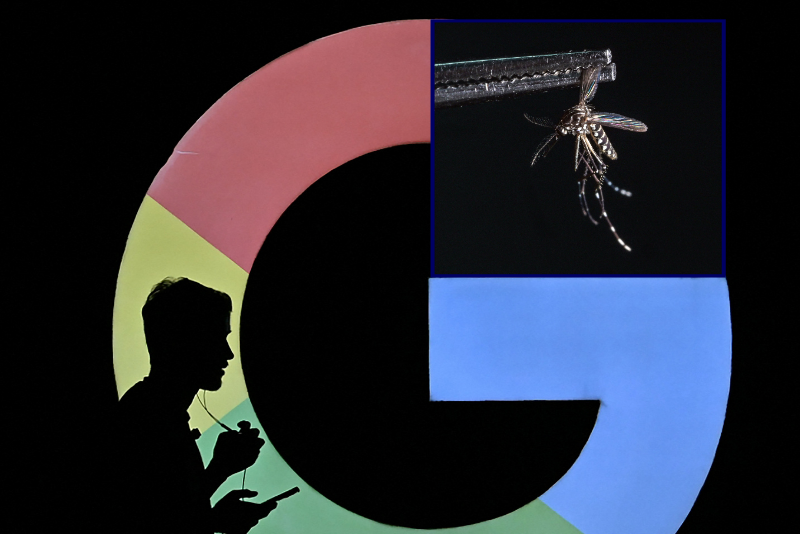
A “biological initiative” linked to Alphabet, Google’s parent company, has prompted public debate after Verily, its life sciences subsidiary, filed a request with the U.S. Environmental Protection Agency (EPA) for an Experimental Use Permit.
If approved, the two-year project would involve the phased release of up to 32 million lab-bred male mosquitoes across California and Florida — specifically up to 16 million per state, with releases planned in Florida in the first year and California in the second.
Alphabet Inc. is a publicly traded company that is primarily owned by large institutional investors such as Vanguard and BlackRock.
Operating under Alphabet’s “Debug” initiative, the project allegedly targets disease-carrying mosquito populations, primarily Culex species, such as Culex quinquefasciatus, which are “vectors for illnesses including West Nile virus and St. Louis encephalitis,” according to the company.
Meanwhile, the proposal has since generated significant online discussion and concern, with critics questioning the large scale, the involvement of a major technology company in ecological interventions, possible unintended environmental effects and the principle of conducting such experiments without direct community consent.
Much skepticism has focused on why a for-profit tech firm is leading the effort rather than traditional public health agencies, with calls for strong independent oversight. In response, entomologists hired by the company have claimed that the project does not involve genetic engineering. Instead, it uses a “naturally occurring bacterium called Wolbachia, found in roughly 40% of insect species.”
Lab-bred male mosquitoes are infected with a specific strain of Wolbachia. Since male mosquitoes do not bite humans, the releases will not increase biting or disease transmission. When these males mate with wild females lacking the same Wolbachia strain, the resulting eggs are “non-viable due to cytoplasmic incompatibility. This gradually suppresses the local population of disease-carrying mosquitoes,” the company continued.
Verily says they are using advanced technology to manage the program, including automated rearing systems, artificial intelligence (AI) and computer vision for highly accurate sex-sorting, to ensure no females are released, as well as vehicle- or drone-based distribution methods.
In Fresno, California, the prior Debug project allegedly achieved up to 95% suppression of target Aedes aegypti populations in treated areas. The EPA is currently reviewing the permit application and is accepting public comments through June 5th after which it will make a final decision.
Once the headlines broke about Alphabet’s mosquito initiative, politicians and online users voiced fierce opposition, questioning the risks of the project.
“Why does Google have 32 million mosquitos? Have we not learned our lesson with Kudzu, Sparrows, Black Birds, Asian Carp? Should I go on? Don’t mess with the balance of nature,” Rep. Tim Burchett (R-Tenn.)
Stay informed! Receive breaking news alerts directly to your inbox for free. Subscribe here. https://www.oann.com/alerts
What do YOU think? Click here to jump to the comments!
Join the conversation!
Please share your thoughts about this article below. We value your opinions, and would love to see you add to the discussion!