

OAN Staff Brooke Mallory
5:15 PM – Monday, May 18, 2026
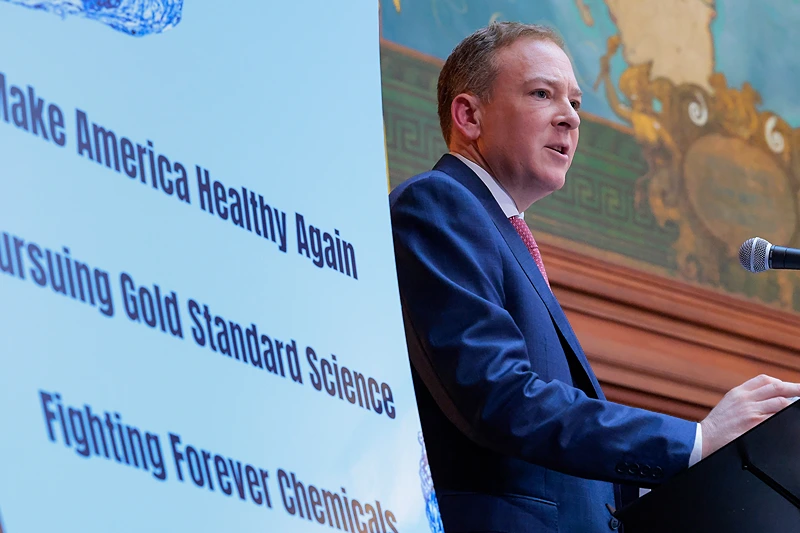
In a step toward addressing nationwide water contamination, the U.S. Environmental Protection Agency (EPA) has announced nearly $1 billion in grant funding specifically targeted at combating per- and polyfluoroalkyl substances, widely known as PFAS or “forever chemicals.”
This federal investment represents a critical pillar of the agency’s broader PFAS Strategic Roadmap, providing states, territories, and local communities with the necessary resources to confront these highly persistent toxins.
Trending: BREAKING: President Trump Posts Picture Of Himself With Big Grey Alien On TruthSocial
The newly unlocked capital is designed to facilitate rigorous testing and treatment across public water systems, while also offering financial backing to private well owners dealing with contaminated water supplies.
“At the Trump EPA, working closely with @SecKennedy [and] @HHSGov and building upon our recent partnership to tackle microplastics in drinking water, we are teaming up to rapidly fast-track solutions that treat and breakdown PFAS chemicals. We closely examine traits like bioaccumulation and persistence and have never been more optimistic about the future and new technologies being developed and coming online that DESTROY ‘forever chemicals,’” EPA Administrator Lee Zeldin posted on X.
Zeldin announced that the agency is rescinding drinking water limits for four major types of PFAS (PFNA, PFHxS, GenX, and PFBS) to restart the rulemaking process from scratch, while arguing that the Biden administration rushed the limits.
The EPA is also proposing to allow water utilities a two-year extension, until 2031, to comply with the remaining limits on PFOA and PFOS.
The allocation of these funds coincides with the federal government’s implementation of legally enforceable national drinking water standards for several specific types of forever chemicals, including PFOA and PFOS.
However, since these synthetic compounds do not naturally break down and tend to bioaccumulate indefinitely in human tissue and the environment, public water infrastructure faces massive technological challenges in filtering them down to the near-zero levels deemed safe by health scientists.
Nonetheless, public health advocates have overwhelmingly welcomed the federal funding, citing decades of evidence linking prolonged PFAS exposure to severe health complications, including immune system suppression, developmental delays in children, and elevated risks for certain types of cancer.
While municipal leaders acknowledge that the $1 billion injection is a vital down payment for public safety, industry analysts argue that the cleanup of America’s contaminated water infrastructure will ultimately require significantly more capital.
Under the Safe Drinking Water Act and the specific guidelines established for the EPA’s Emerging Contaminants in Small or Disadvantaged Communities grant program, a small community is defined by a statutory population threshold.
To qualify under this category, a community’s public water system must serve fewer than 10,000 individuals. Additionally, the community must be determined by the EPA administrator to lack the financial capacity to incur the debt necessary to independently finance complex water infrastructure projects or PFAS filtration activities.
The definition of a disadvantaged community is designed with more flexibility, as the federal government grants individual states and territories the discretion to establish their own specific affordability criteria.
A public water system qualifies under this designation if it meets its respective state’s criteria under the Safe Drinking Water Act, or if it is projected to become disadvantaged as a direct result of taking on the debt required to remediate the chemical contamination.
To assist states in identifying these areas, the EPA recommends evaluating socioeconomic distress, such as whether a community’s median household income falls significantly below the state average or if it scores low on an “Ability to Pay” Index.
This initiative also extends its reach beyond municipal systems by permitting states to use the grant funds to assist households reliant on privately owned wells, particularly by funding projects to connect those homes to a clean, compliant community water system if their private supply exceeds safe health-based PFAS thresholds.
Moving forward, the EPA reportedly intends to leverage this funding to jumpstart immediate testing campaigns and local filtration projects, aiming to protect millions of residents from contaminated tap water and ensure safer, cleaner resources for communities across the U.S.
Stay informed! Receive breaking news alerts directly to your inbox for free. Subscribe here. https://www.oann.com/alerts
What do YOU think? Click here to jump to the comments!
Join the conversation!
Please share your thoughts about this article below. We value your opinions, and would love to see you add to the discussion!